
Focused material tools
Reference basis: fixed unit conversions follow the NIST SI conversion tables. Bulk density is product- and condition-specific; the FHWA Field Materials Manual documents aggregate sampling and moisture-density testing; supplier or project data for the actual product and condition should replace the planning preset when available. The USGS aggregates program is used for aggregate terminology and scope. Read the full methodology and limitations.
Rock, Gravel & Aggregate Calculators
Choose a calculator for rock, gravel, crushed stone, aggregate, sand, road base, drainage stone, riprap, asphalt, or a closely related bulk-material conversion.
Reviewed: September 24, 2026
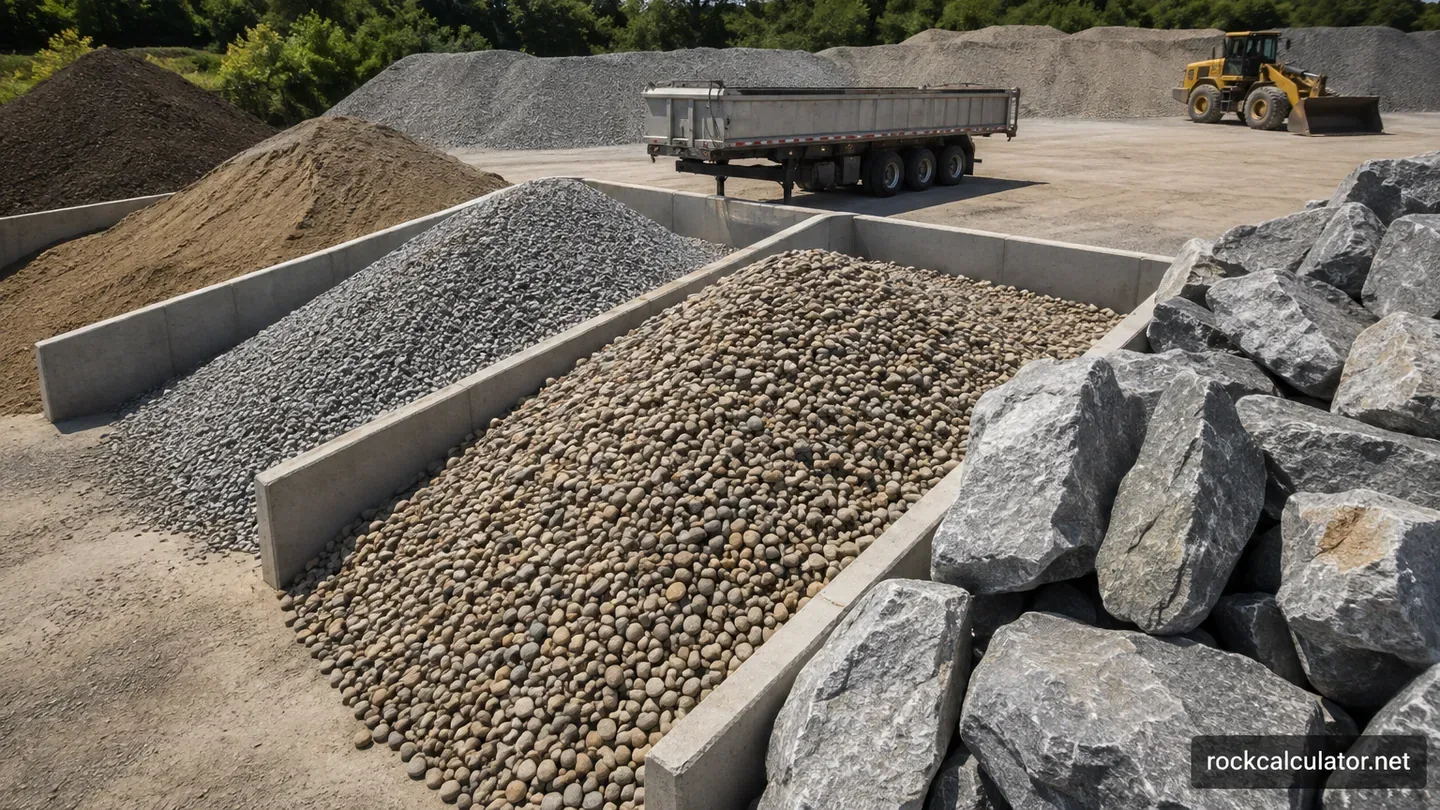
Choose the result you need
Start with the material and purchase unit on the supplier quote. Calculate separate layers or areas when depth, density, or material changes. Density presets are planning values; a supplier value is usable only when it describes the exact product and the same loose or installed state as the volume being converted.
Rock, aggregate and sand
Project and driveway tools
Related soil and landscape materials
Fill dirt, compost and organic mulch remain secondary presets on the main calculator. They do not need separate pages that repeat the same task.
Conversions and supplier comparison
Directory updated October 16, 2026.
A traceable estimating path
Measure geometry first, convert volume second, and use a supplier density only when a weight estimate is required. Add waste, settlement, or compaction for a stated reason and never silently apply the same allowance twice.
Before placing an order
Confirm the exact product, loose or compacted basis, order unit, minimum load, delivery fee, access limits, and tax. Calculators estimate quantity; they do not select a structural pavement section or guarantee a supplier’s load size.