
Formula used
Gross installed trench ft³ = length × width × (stone-filled depth ÷ 12)
Optional pipe ft³ = π × (outside diameter ÷ 24)² × trench length × pipe count
Net installed stone yd³ = (gross trench ft³ − pipe ft³) ÷ 27
Estimated short tons = net installed stone yd³ × (1 + stated field allowance ÷ 100) × matching-state density
Reference basis: fixed unit conversions follow the NIST SI conversion tables. Bulk density is product- and condition-specific; the FHWA Field Materials Manual documents aggregate sampling and moisture-density testing; supplier or project data for the actual product and condition should replace the planning preset when available. The USGS aggregates program is used for aggregate terminology and scope. Read the full methodology and limitations.
Keep trench stone, surface cover, and separate zones distinct
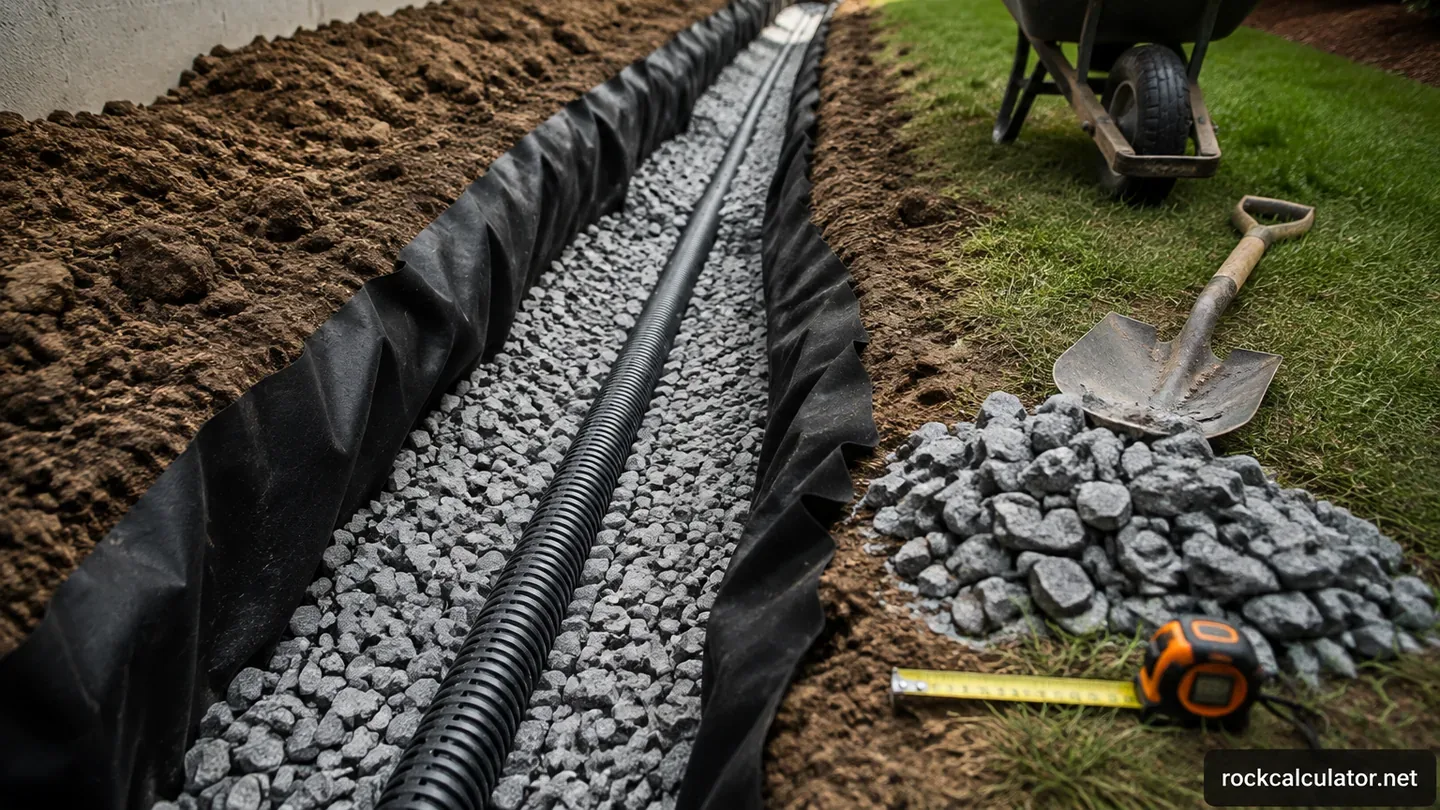
Use the depth actually occupied by stone. A soil or turf cap above the aggregate is not part of the stone-filled depth; estimate a required soil cap separately with the Topsoil Calculator. A decorative swale or surface drainage bed has different geometry from this pipe-trench takeoff.
If trench width or stone depth changes, calculate each measured section separately and sum quantities for the same product. Deduct a pipe's outside volume only in the section it occupies. Bedding and cover already contained within a full stone-filled section must not be added again as extra volumes.
Ask for the specified clean aggregate rather than assuming every product sold as “drainage stone” or #57 meets the drainage detail. The grade guide explains why product grading and fines matter. Quantity calculations do not choose pipe size, stone grading, filter compatibility, slope, or an outlet.
Worked French drain stone example
Example values: A 60 ft × 1.5 ft × 18 in stone-filled trench is 5.00 installed yd³ gross. One 4 in outside-diameter pipe displaces 0.194 yd³, leaving 4.806 installed yd³ of stone before allowance. Adding a stated 10% field allowance produces 5.287 adjusted installed yd³ and, if 1.45 short tons/yd³ describes that same state, 7.67 short tons. Four inches of bedding plus the 4 in pipe plus 6 in of cover accounts for 14 of the 18 vertical inches; the remaining section must be reconciled with the actual detail rather than silently filled by the calculator.
Volume, density, and supplier units
Use clean-stone density from the supplier and confirm whether the order will be by ton or cubic yard before scheduling delivery. The crushed-stone guide explains why clean open-graded stone and dense-graded base with fines are not interchangeable.
Field conditions that change tonnage
Trench overbreak, bedding below the pipe, aggregate above it, pipe displacement, fabric folds, and settlement influence stone quantity.
Questions specific to this calculation
Which bulk density belongs in the French drain tons estimate?
Use an installed-state bulk density for the exact clean drainage aggregate and moisture condition. If only a loose delivered density is available, obtain a documented loose-to-installed yield conversion before using it with this installed-volume tool. Enter trench length, actual trench width, and stone-filled depth; deduct ideal pipe displacement only if the project takeoff requires it. That subtraction does not establish drainage adequacy.