
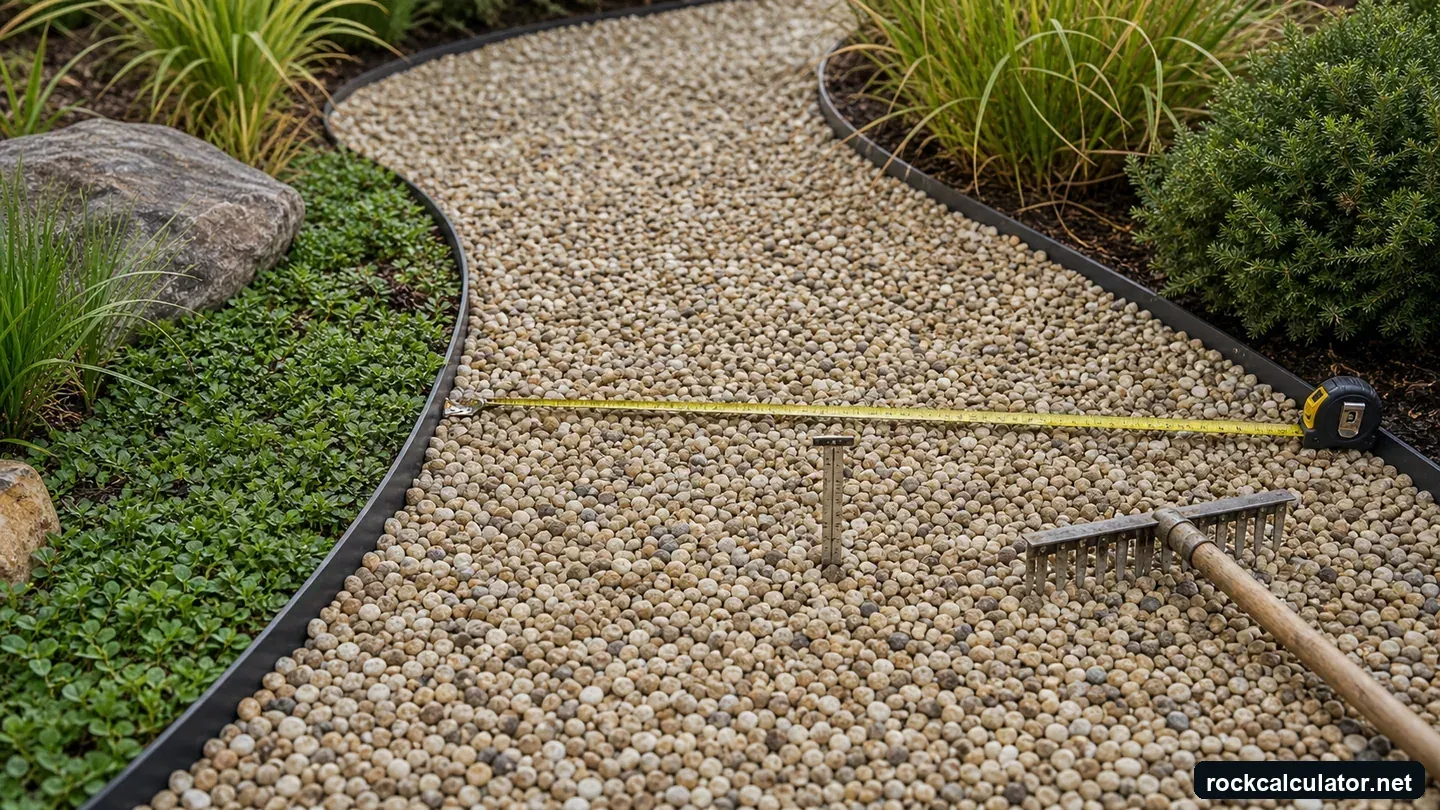
What this pea gravel calculator returns
Quick answer: Estimate the volume, weight, bags, and cost of a rectangular pea-gravel layer for paths, patios, planting beds, borders, and similar loose-fill projects.
Measure between the edging that will contain the stone and use the final visible depth. Separate steps, tree wells, planters, and tapered edges rather than inflating one rectangle.
Formula used by the calculator
Installed cubic feet = length × width × (depth in inches ÷ 12)
Installed cubic yards = cubic feet ÷ 27
Base short tons = cubic yards × density for the same material state
Recommended short tons = base short tons × (1 + stated allowance ÷ 100)
Pea-gravel source basis: unit conversions follow NIST. The USGS natural-aggregates program supplies the material taxonomy; it does not prescribe landscape depth or bulk density. Rounded-stone presets remain editable because particle size, moisture, and loading change delivered weight. Method and limits.
On the Pea Gravel Calculator, estimated cost equals recommended short tons multiplied by the entered price per ton. Bag count converts recommended tons to pounds, divides by the selected bag weight, and rounds upward. Coverage is length multiplied by width; depth is still required before area becomes volume.
Density is an editable conversion, not a universal constant
The page opens with 1.5 short tons per cubic yard as an example density for pea gravel. Pea gravel is rounded and does not lock together like angular base aggregate. It can migrate at edges and under traffic, while particle grading, moisture, and supplier source still change the delivered bulk density.
If a supplier provides a different tons-per-yard figure, first check whether it describes the installed bed or loose delivered pea gravel. Use it directly only when the material states match; otherwise obtain a documented yield conversion. Solid-stone density cannot stand in for bulk gravel with voids between particles.
Worked pea gravel example
Example values: 18 ft × 8 ft × (2.5 in ÷ 12) ÷ 27 = 1.11 yd³. At 1.50 short tons/yd³, base weight is 1.67 short tons; with 8% allowance, the example order is 1.80 short tons. Replace these values with project and supplier data.
Turn the result into an order
Compare bulk delivery with bags using total pounds only as a planning conversion. The calculator rounds bags upward, but a store's bag weight and a supplier's delivery minimum must be entered or checked separately.
For a small contained bed or repair, compare the calculated whole-bag count with the supplier’s bulk-delivery minimum; bags may be more practical even when their unit cost is higher. For paths or larger beds, confirm edging and traffic suitability before treating a bulk quantity as a complete installation plan.
Common pea gravel estimating errors
- Measuring to an open edge without allowing for lateral migration or installing containment.
- Using the same depth for a decorative skim and a walking surface without checking the project build-up.
- Assuming rounded pea gravel compacts and stabilizes like crushed angular stone.
Questions specific to pea gravel
Why does pea gravel need edging?
Rounded particles move more readily under foot traffic and runoff than angular stone. Edging does not change the geometric volume, but it helps the installed layer retain its planned footprint and depth.
Can pea gravel be used for a driveway?
The calculator can measure it, but quantity does not establish suitability. Rounded gravel may rut or migrate under vehicles; confirm the specified material and section with a local contractor or supplier.
How many bags should I buy?
Select the bag weight actually sold, enter the project dimensions and density, and use the whole-bag output. Compare that total with bulk delivery once the quantity becomes large.
Does moisture change pea-gravel weight?
It can. Surface water and material grading affect delivered bulk weight, which is why a supplier-specific tons-per-yard value is preferable to the editable example density.