
Formula used
Adjusted installed bedding yd³ = [length × width × (installed bedding depth ÷ 12) ÷ 27] × (1 + stated field allowance ÷ 100)
Bedding short tons = adjusted installed bedding yd³ × density for that same state
Joint-sand bags = [paved area × (1 + allowance ÷ 100)] ÷ labeled package coverage, rounded up
Reference basis: fixed unit conversions follow the NIST SI conversion tables. Bulk density is product- and condition-specific; the FHWA Field Materials Manual documents aggregate sampling and moisture-density testing; supplier or project data for the actual product and condition should replace the planning preset when available. The USGS aggregates program is used for aggregate terminology and scope. Read the full methodology and limitations.
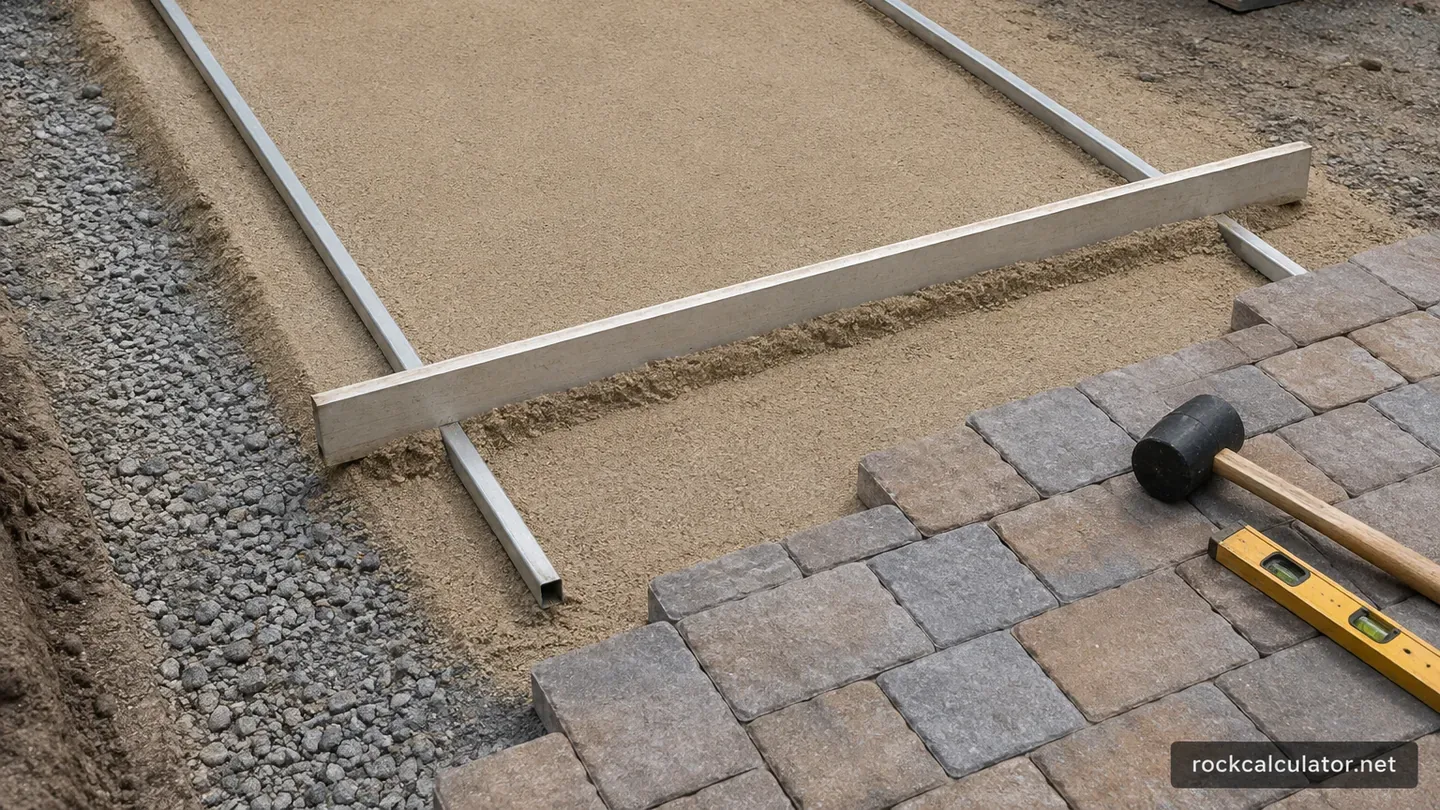
Confirm whether the paving system uses sand or stone bedding
For sand-set interlocking concrete pavement, CMHA's guide specification sets bedding-sand requirements and excludes stone dust. A generic “screenings” quote does not establish that it meets those requirements.
Permeable systems may instead specify open-graded stone: CMHA's permeable-paver guide specification describes No. 8 stone bedding over a No. 57 base. Follow the selected system and use the Crushed Stone Calculator for those aggregate quantities. Keep any sand bedding and joint-sand package coverage separate; the same area does not imply the same product or bag yield.
Worked paver bedding sand example
Example values: 20 ft × 15 ft × (1 in ÷ 12) ÷ 27 = 0.93 installed yd³. With a stated 5% field allowance, the adjusted installed volume is 0.97 yd³. If the entered 1.31 short tons/yd³ density describes that same state, the estimated weight is 1.27 short tons. A loose delivered sand density needs a documented yield conversion before use here.
Joint sand uses labeled coverage, not bedding depth
Joint-sand yield depends on the product, paver size, joint width, joint depth, compaction passes, and surface texture. Enter the manufacturer’s square-feet-per-bag coverage for the actual paver and joint configuration. The calculator rounds the result up to whole bags but does not invent a universal joint-volume factor.
Volume, density, and supplier units
Convert the result to the bag, bulk ton, or cubic-yard unit sold locally using the chosen product's density and package yield.
Field conditions that change tonnage
Screed-bed thickness, base tolerance, sand moisture, compaction, and whether the product is bedding or polymeric joint sand change demand.
Questions specific to this calculation
Which bulk density belongs in the paver sand tons estimate?
Use the bedding product's bulk density in short tons per cubic yard for the installed bedding state specified by the paver system. The bedding tool uses installed depth, so a loose-delivered density needs a documented yield conversion outside this tool. Joint sand uses the separate package-coverage mode and the label's square feet per bag; it does not use bedding density.