
Formula used
Total mass = length × width × height × unit conversion × shape factor × solid density × quantity
Reference basis: length, volume, kilogram, pound, and short-ton conversions follow the NIST SI conversion tables. Solid density must come from a material data sheet, fabricator, laboratory result, or other documented source for the stone being estimated. Read the methodology and limits.
Worked cut-stone example
Example values: a 36 × 24 × 18 in rectangular piece has a 9.00 ft³ volume. At a documented 2,700 kg/m³ solid density and a 1.00 shape factor, its estimated mass is about 688 kg, 1,517 lb, or 0.758 short ton.
Choosing and bounding the shape factor
A shape factor is the estimated fraction of the measured rectangular envelope actually occupied by stone. Use 1.00 for a rectangular cut block. For an irregular piece, calculate a range rather than presenting one guessed factor as exact: with the 36 × 24 × 18 in envelope above, factors of 0.70 and 0.52 give about 1,062 lb and 789 lb, compared with the 1,517 lb rectangular-envelope upper estimate. A measured volume method can improve the estimate for a manageable piece, but hidden voids and density variation remain.
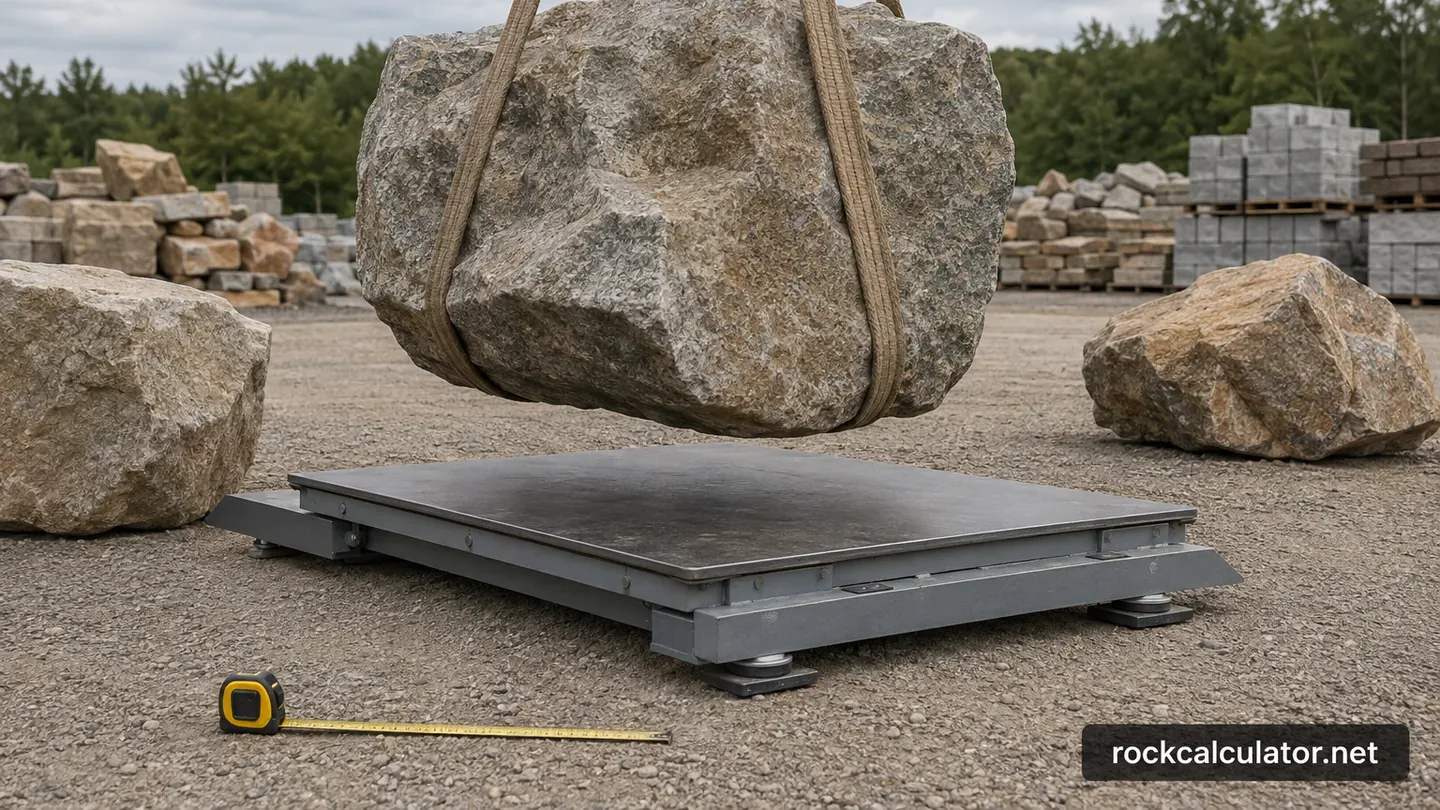
When a trailer, hoist, crane, floor, or other load limit matters, obtain a scale ticket or documented fabricator weight. Do not select lifting equipment from a shape-factor estimate.
Solid pieces are not bulk aggregate
This tool estimates an individual solid piece. Use the cubic-yard or tonnage calculator for loose stone, because air gaps make bulk density fundamentally different from solid mineral density.
Shape and lifting limits
Irregular outlines, hidden voids, fractures, porosity, and moisture change actual mass. When handling limits matter, obtain a scale ticket or fabricator weight instead of relying on dimensions.
Questions specific to this calculation
Can I use tons per cubic yard for a boulder?
No. This calculator expects solid density in kg/m³. Tons per cubic yard for delivered aggregate includes void space and is not a solid-stone density.